The recent Local Government Innovation Hackathon, organised by the Ministry for Housing, Communities and Local Government, GDS Local, the Local Government Association, and Birmingham City Council, demonstrated what’s possible when expertise, lived experience, and technical capability come together with purpose.
As the first event organised by the recently formed GDS Local unit within the Department for Science, Innovation and Technology, it also provided a perfect platform to showcase GDS Local’s ambitions to work with councils to improve local services.
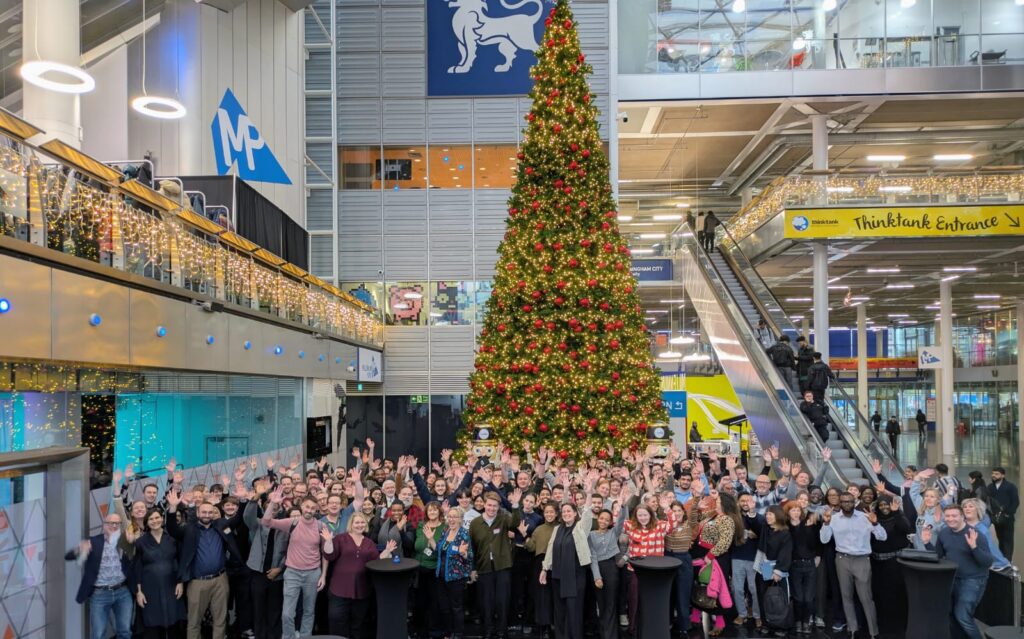
Over two intensive days, 150 participants from 70 organisations came together in 14 multidisciplinary teams to create solutions to some of the most pressing challenges facing local government today: homelessness, rough sleeping, and temporary accommodation. The teams then had less than 24 hours to build working prototypes in response to real-world challenge statements set by the organisers.
Our colleagues Jo Frances, Matthew McElroy, and Geettika Kejriwal had the opportunity to take part, and their reflections offer a vivid picture of how this hackathon set a new benchmark for innovation and what the wider public sector can learn from it.
A hackathon designed around real public sector problems
From the outset, MHCLG shaped this hackathon to ensure impact rather than abstraction. Instead of generic prompts, participants chose from three strategic, human-centred challenge statements that could be addressed using data and AI solutions. Each of these was rooted in lived experience, operational realities and policy priorities:
- Using Data and AI to predict and prevent homelessness: How might we ethically harness data and AI to identify individuals or households at risk of homelessness, and enable effective, trusted early interventions?
- AI driven outreach and system efficiency for homelessness and rough sleeping services: How might we ethically leverage AI and digital tools to streamline case management, enhance outreach, and improve the usability of homelessness support systems?
- Optimising temporary accommodation allocation through data driven insights: How might we leverage data and analytics to optimise the allocation and management of temporary accommodation ensuring resources are used efficiently, individual needs are met, and families spend the shortest possible time in temporary accommodation?
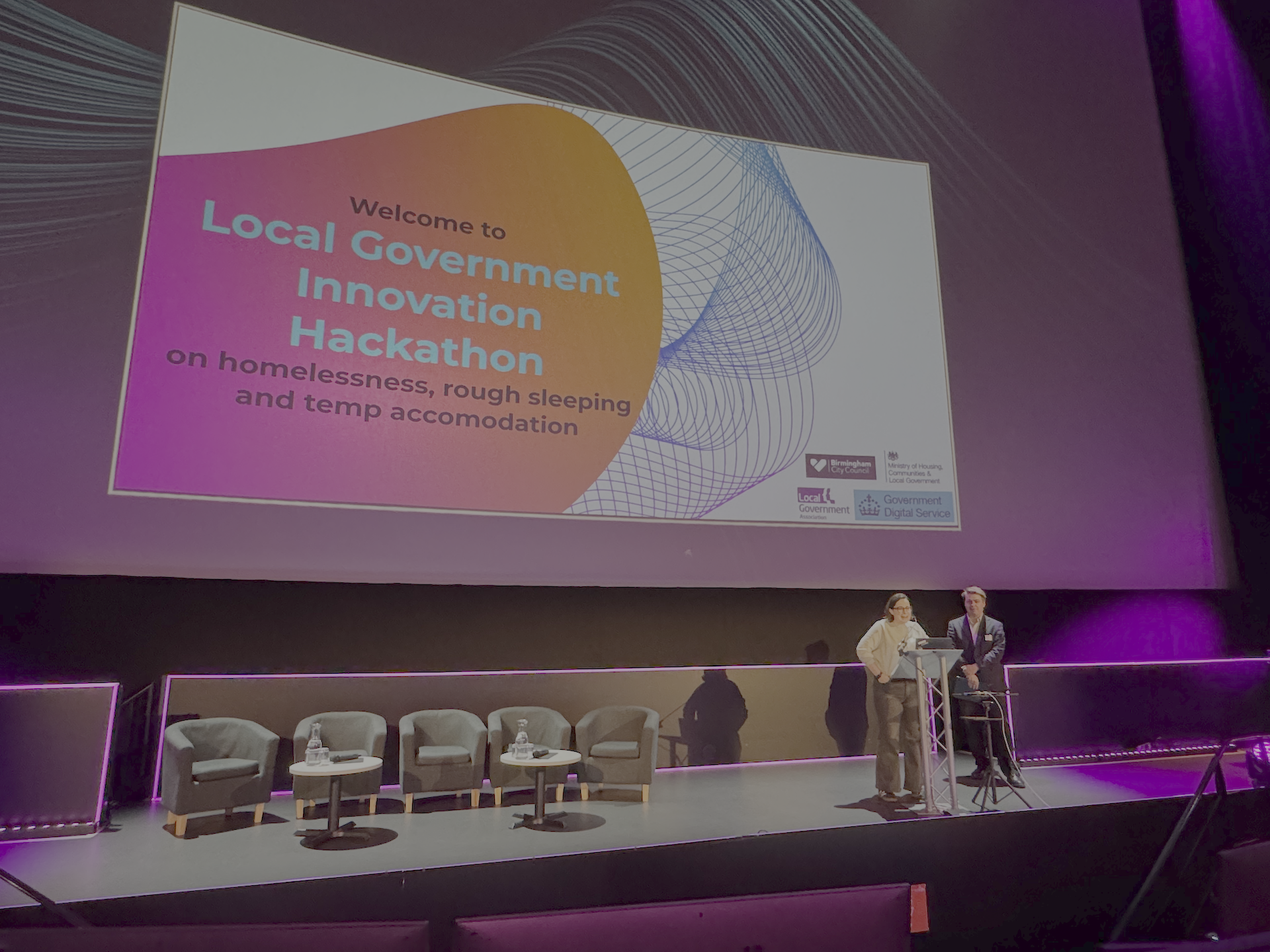
Speakers from MHCLG, Birmingham City Council and frontline services emphasised the urgency of rising homelessness presentations, the strain on temporary accommodation, and the need to shift from crisis response to prevention. Birmingham alone recorded 300 homelessness presentations per week, and over 5,200 households in temporary accommodation, including 11,279 children.
By grounding each challenge in real data, system pressures, and lived experiences, teams felt they weren’t just building prototypes; they were creating solutions for real people.
The Power of Multidisciplinary Teams
Jo, Matthew, and Geettika all stressed that the real value of the hackathon wasn’t the outputs but the people in the room.
Their teams included:
- Technical specialists
- Local authority caseworkers with deep domain expertise
- People with lived experience of homelessness
- User researchers and designers
- Policy experts
- Social value practitioners
This diversity created what Jo described as the power of bringing the right people together.
The technical skill in that room was exceptional — I was genuinely in awe of the solutions people built in two half days of dev time. But what made it powerful wasn’t just the tech. It was having people with lived experience, council caseworkers, designers, data experts, policy leads and technologists all working side by side. You could feel how much everyone cared about getting this right.
Caseworkers sketched real user journeys on the fly. Designers tested assumptions. Technical specialists translated insights into prototypes. Mentors and facilitators from GDS Local and MHCLG moved between teams, adding context and challenging thinking. The environment was fast-paced, collaborative and energising.
Matthew highlighted that being embedded in mixed teams gave him direct exposure to how homelessness services operate, the pain points, and where technology could make a meaningful difference.
I was on a team with four or five people from local authorities who work in homelessness day in, day out. Seeing them draw the user journey — where the pain points are, where people fall through the cracks — was invaluable. It made every design and data decision feel grounded. We weren’t guessing; we were learning directly from the people who know the system best.
This mix of expertise, experience, and execution transformed the event from a hackathon into a genuine innovation engine.
Building high-quality prototypes at speed
Over just two half-days, teams delivered working demos that:
- Merged datasets for early risk identification
- Used AI to streamline case management
- Suggested smarter, more human placement decisions for temporary accommodation
- Improved resident engagement
- Facilitated cross-authority insights into rough sleeping
Jo noted that the technical quality was exceptional, with some prototypes looking like early-stage products rather than 36-hour builds.
To help them deliver their prototypes, teams were given access to a variety of datasets, including statutory homelessness data and rough sleeping counts, deprivation indices, social housing data, and predictive indicators.
They were encouraged to use these responsibly, in line with MHCLG’s guidance on ethical, human-centred AI.
The result? Solutions that balanced ambition with practicality by utilising all the expertise in the room. Built around the people we are trying to help, and the organisations and people who support them.
Beyond the outputs themselves, the hackathon also served as an accelerated learning environment for everyone involved. Participants had the opportunity to experiment with AI tools, explore emerging capabilities, and quickly benchmark their peers’ day-to-day use of AI.
Geettika highlighted that it felt less like a traditional event and more like an accelerated masterclass in AI tools.
Recognising the importance of social value
Geettika’s team received a special mention for its focus on social capital, a dimension often overlooked in technical innovation. Their solution highlighted the importance of community, support networks and relational factors in homelessness journeys.
The caseworkers in our team brought the richness of years of experience that informed our solution. Understanding the social context of person A and person B, who may appear similar at first glance, but a peek into their social connections reveals something that can add value to what big data is telling us. This might just be the innovative perspective we need to solve some of the complex problems in society.
This emphasis aligns with sector-wide reflections: homelessness is not just a housing issue; it’s a social, economic and human one. Solutions that strengthen relationships and resilience can be as impactful as those that optimise systems or automate processes.
A model other government departments can learn from
Everyone agreed: this event set a benchmark.
It demonstrated the value of:
- Cross-government collaboration
- Shared datasets and transparent challenge statements
- A “test and learn” culture
- Embedding service users in the design process
- Freeing teams from business-as-usual constraints
Jo put it best: the hackathon showed what’s possible when you bring experts and builders into the same room with a clear mission.
This is absolutely something other departments could replicate. If you can bring together experts who have kindly volunteered their time – technical, domain, and lived experience – and focus it on a real challenge for two days, the value is enormous. MHCLG created a space where people built things that could meaningfully improve lives.
Matthew added that it elevated conversations about homelessness and digital innovation into spaces where ministers and senior leaders engage, increasing the likelihood that promising ideas will be supported, scaled or funded.
One of the best ways to get ideas in front of senior leaders and ministers, because hackathons strip away hierarchy. You’re suddenly in a room where everyone’s equal — from developers to directors — and you’re all focused on solving the same problem.
Homelessness is complex. No single tool, dataset or organisation can solve it alone.
This hackathon highlighted three truths:
1. Innovation thrives when people with different expertise work side-by-side.
Local government holds the insight. Technologists hold the capability. Lived experience gives direction. Together, they produce meaningful solutions.
2. Data becomes powerful when shared, contextualised and tied to real outcomes.
The local government presentations from London, Barnsley, and Somerset illustrated the range of activities already underway across local government, showing how data and AI are being used by local authorities to better understand demand, support frontline decision-making, and inform service improvement.
3. Collaboration accelerates change.
In two days, teams built prototypes that could otherwise take months. The concentrated energy and interdisciplinary teams unlocked creativity in a way standard delivery cycles rarely allow.
Final reflections: Innovation is a team sport
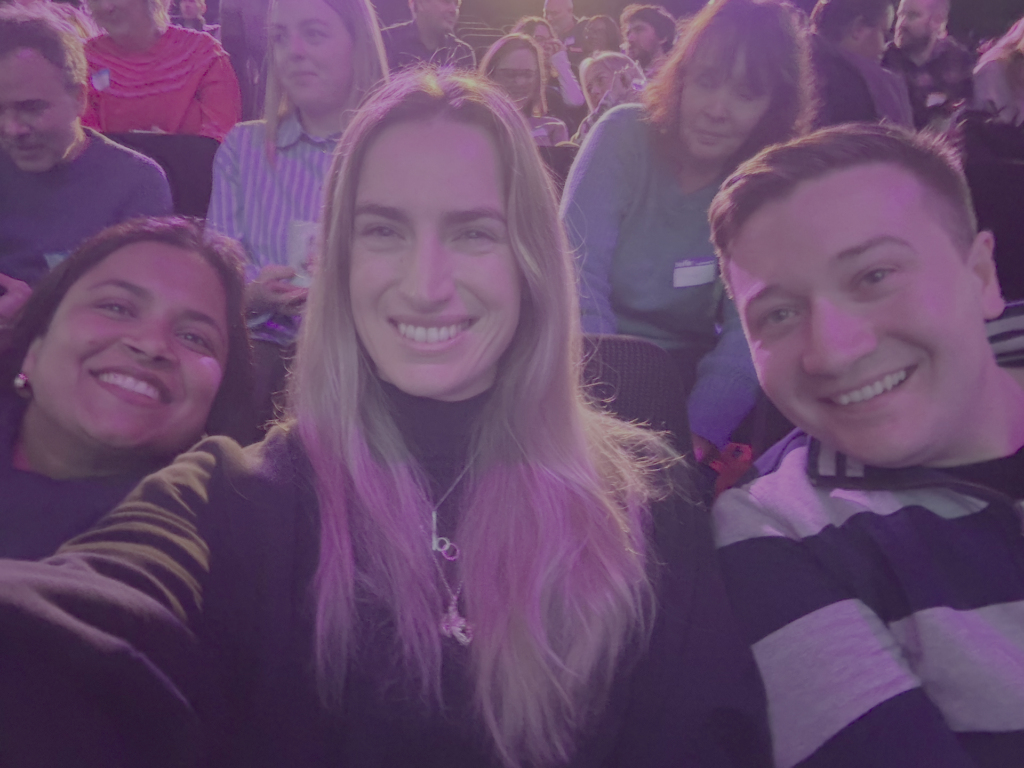
For Jo, Matthew, and everyone who attended, the biggest takeaway wasn’t just the solutions but the hackathon setup itself.
A model where:
- Hierarchies flatten
- Expertise is shared
- Creativity is valued
- Public service challenges are treated with urgency and humanity
- And people come together because they believe in making things better
The public sector is full of committed, talented people. When they’re given the space, support and permission to collaborate — as they were in Birmingham — genuine innovation becomes not just possible, but inevitable.
Geettika share a similar sentiment, noting that:
My biggest takeaway from the day was understanding where my industry peers are at and how we as design consultants are using tools to aid our work. Learning tools and building the confidence to use them in 2 days felt almost like an expedited masterclass. The hackathon left me feeling inspired and refreshed.
Find out more about our Data and AI expertise.
About the Author

Made Tech Team
Blog posts from the team at Made Tech